
Understanding Diesel Smoke Color
When an industrial diesel engine starts producing unusual exhaust smoke, it is trying to tell you something. The color of the smoke can provide important clues about what is happening inside a diesel engine. Whether incomplete combustion, restricted airflow, oil consumption or coolant entering the combustion chamber, the smoke color can be an indicator of where to focus your attention..
Smoke color alone won’t diagnose an engine problem, but it can help point you in the right direction of where to look for an issue. Knowing what to look for, combined with proper preventative maintenance, can help identify problems before they turn into expensive repairs or downtime.
At Crosspoint Power, we help customers keep their Yanmar industrial engines running properly with authentic O.E.M. parts, technical support, Smart Assist diagnostic support, and Yanmar P.M. schedules.
What different smoke colors mean for your engine?
The color and consistency of diesel exhaust can reveal clues about how an engine is operating. Understanding what each smoke color typically indicates can help narrow down potential issues, identify when further inspection is needed, and determine the right next steps to protect engine performance.
Blue Smoke: Oil Is Getting Where It Shouldn’t
Blue or blue-gray exhaust smoke is commonly associated with engine oil being burned during combustion. This is commonly called “burning oil”. This can happen when oil gets past components that are designed to keep it out of the combustion chamber.
Depending on the engine and operating conditions, possible causes can include:
- Worn piston rings
- Cylinder or liner wear
- Valve, Valve stem or valve guide issues
- Turbocharger seal problems
- Excessive crankcase pressure
- Overfilled or incorrect engine oil
- Internal engine wear
A small amount of smoke during certain operating conditions may not immediately mean an engine needs to be rebuilt. During start up or engine ramp. However, persistent blue smoke should be investigated, particularly if it is accompanied by increasing oil consumption, loss of power, changes in engine performance or engine codes.
Preventing Blue Diesel Smoke
Regular oil and filter changes are some of the simplest ways to protect the engine’s internal components. Clean and filtered engine oil helps prevent wear and breakage of internal engine components.
Good preventative maintenance logs are crucial for long life. Always track any change in engine performance or smoke color as this can help a technician in the future. The reality is not all engines are the same and having the correct oil type and filters ensure long life.
To reduce wear and maintain optimal engine performance, follow the manufacturers’ guidelines regarding:
- Oil type and viscosity
- Oil change intervals
- Oil filter replacement intervals
- Air filter service
- Inspection procedures
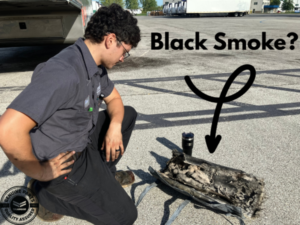
Black Smoke: Too Much Fuel or Not Enough Air
Black smoke is often associated with incomplete combustion caused by an overly rich air-to-fuel condition. This is commonly known as a rich mixture. In simple terms, the engine may be receiving more fuel than it can efficiently burn, or it may not be getting enough air making the normal amount of fuel rich. Yanmar Diesel engines run on a specific ratio of fuel to air.
Potential causes include:
- A restricted or dirty air filter
- Intake system restrictions
- Turbocharger
- Fuel injector problems
- Incorrect fuel delivery
- Poor fuel quality
- Engine overload
- Problems with the fuel injection system
A diesel engine that produces a brief puff of black smoke under heavy acceleration or load may not necessarily have a serious problem. Heavy or continuous black smoke, however, deserves attention. Running an engine with an air or fuel problem for an extended period can affect performance, fuel economy, emissions, and component life.
Preventing Black Diesel Smoke
Air and fuel systems should be maintained according to the engine manufacturer’s recommendations. Regularly inspecting and replacing air filters, maintaining fuel filters, using clean fuel, and following the proper service intervals can help prevent many common causes of black smoke. It is also important to make sure the engine is operating within its intended load and application parameters. This can help ensure your engine will have a long healthy life.
White or Gray Smoke: Combustion May Be the Clue
Gray or white-looking exhaust can have several possible causes, and the conditions under which it appears are especially important. When and for how long is key. Cold starts can produce temporary white exhaust as unburned fuel vapor passes through the engine before normal combustion temperatures are reached.
Persistent white or gray smoke may indicate issues such as:
- Poor fuel atomization
- Injector problems
- Incorrect injection timing
- Low compression
- Glow plug or starting-assist issues where applicable
- Coolant entering the combustion chamber
- An engine that is operating below its proper temperature
If the smoke continues after the engine reaches operating temperature, further diagnosis is recommended.
If white smoke is accompanied by coolant loss, overheating, or other cooling-system symptoms, the engine should be inspected promptly. This could mean coolant is being burned, and a diesel engine that is not damaged or worn should never burn coolant.
Preventing White or Gray Diesel Smoke
Keeping the fuel system, cooling system, and engine starting system properly maintained can help prevent many of these conditions.
Adhere to the manufacturer’s recommendations for:
- Fuel filter replacement
- Cooling system inspection
- Coolant level and condition
- Injector and fuel-system service
- Valve clearance inspection
- Other scheduled engine maintenance
Mixed or Changing Smoke: Look at the Whole Picture
Sometimes exhaust smoke doesn’t fit neatly into one category. Smoke may change from gray to black, blue to gray, or appear differently depending on engine temperature, load, RPM, or operating conditions. That’s when context becomes extremely important.
Ask key questions to help identify issues related to diesel smoke color:
- Does the smoke happen during startup?
- Does it disappear once the engine warms up?
- Does it happen only under load?
- Is the engine consuming oil?
- Is coolant level changing?
- Has fuel consumption increased?
- Has engine power changed?
- Did the problem begin after maintenance or a repair?
- Are there any warning lights or fault codes?
While smoke color alone will not diagnose an problem, these details can help narrow down the possible cause. Instead of simply asking, “What color is the smoke?”, a technician should be asking, “When does it happen, and what else is the engine doing?”
Preventative Maintenance: The Best Smoke Detector Is a Maintenance Schedule
The best way to deal with many engine problems is to catch them before they become major problems. Preventative maintenance isn’t simply changing the oil every so often. A proper maintenance program considers the entire engine and its operating environment.
Depending on the specific Yanmar engine and application, maintenance may include:
- Engine oil and filter replacement
- Fuel filter inspection/replacement
- Air filter inspection/replacement
- Cooling system inspection/maintenance
- Belt inspection
- Hose inspection
- Valve clearance checks
- Fuel system inspection
- Battery and starting-system checks
- Intake and exhaust system inspection
- Periodic inspections based on operating hours
Maintenance Intervals & Warranties
The correct maintenance intervals vary by engine model and application. That’s why using the manufacturer’s recommended maintenance schedule is so important. Logging the history of these P.M. cycles are critical for warranty claims and noticing small changes over time. Always log every maintenance action taken on any diesel engine. You’ll thank yourself down the road!
Where Crosspoint Power Can Help
Keeping an industrial diesel engine running at peak performance takes more than simply replacing parts when something breaks. At Crosspoint Power & Refrigeration, we provide customers with access to authentic Yanmar parts, technical resources, and support to help keep their engines working the way they were designed to.
Authentic Yanmar Parts
The right part matters! Using genuine Yanmar parts for scheduled maintenance helps ensure that the components being installed are designed for the specific engine they are going into. From filters and maintenance components to replacement engine parts, CrossPoint can help you identify the right parts for your Yanmar engine.
Smart Assist Diagnostic Support
When an engine isn’t operating correctly, guessing can get expensive. Crosspoint customers can utilize Yanmar Smart Assist diagnostic capabilities to help technicians identify faults and troubleshoot engine issues quickly and completely. Combined with the information available from the engine itself, diagnostic tools can help turn a symptom into a direction for troubleshooting. Troubleshooting, in turn, provides directions for part functionality checks and replacement parameters.
Technical Expertise
Sometimes the most valuable part isn’t a physical part at all—it’s having someone who knows the engine to help you work through a problem. Our team can help connect customers with the technical information and resources needed to troubleshoot Yanmar industrial engines and determine the appropriate next step.
Authentic Yanmar Preventative Maintenance Schedules
Every engine has different maintenance requirements. CrossPoint can help customers identify the appropriate Yanmar preventative maintenance schedule for their specific engine, so important service isn’t overlooked. Following the manufacturer’s recommended maintenance schedule can help reduce unnecessary wear, identify developing problems earlier, and keep your equipment productive.
Don’t Ignore What Your Engine Is Telling You
Smoke isn’t automatically a sign that an engine is about to fail. But persistent or unusual smoke shouldn’t be ignored either.
Blue, black, gray, white, or changing exhaust can provide valuable clues about what’s happening inside an industrial diesel engine. Combined with proper diagnostics and preventative maintenance, those clues can help technicians find problems sooner and avoid unnecessary downtime.
If your Yanmar engine isn’t running the way it should, CrossPoint Power is here to help.
Need help identifying a Yanmar engine, finding the correct maintenance parts, or troubleshooting an engine issue? Contact CrossPoint Power.
We can help you get the right parts, the right information, and the right support to keep your Yanmar engine working at peak performance for the long haul.
Need some help answering these questions? Call us at 317-831-5932 to speak with a diesel engine specialist. Our engine experts can assess your diesel engine and recommend the right solution, at the right price, in the right time frame for your success.
FAQs About Diesel Smoke
What do the different colors of diesel exhaust smoke mean?
Diesel exhaust smoke color can provide clues about engine condition. Blue smoke typically indicates burning oil, black smoke often points to incomplete combustion caused by too much fuel or insufficient air, and white or gray smoke may indicate unburned fuel, poor combustion, or coolant entering the combustion chamber. The timing and duration of the smoke also matter when identifying the potential cause.
Is it normal for a diesel engine to smoke when starting?
A small amount of white or gray smoke during a cold start can be normal, particularly in colder temperatures. It may result from unburned fuel vapor before the engine reaches its proper operating temperature. However, smoke that continues after the engine warms up should be investigated.
What causes black smoke from a diesel engine when accelerating?
Black smoke during acceleration or under heavy load can indicate incomplete fuel combustion. Common causes include a restricted air filter, intake restrictions, turbocharger problems, faulty fuel injectors, poor fuel quality, or excessive engine load. Persistent black smoke warrants inspection of the engine’s air and fuel systems.
Can diesel exhaust smoke indicate a serious engine problem?
Yes. Persistent blue, black, white, or gray smoke can indicate underlying engine problems that may affect performance, fuel efficiency, and component life. Smoke accompanied by coolant loss, overheating, increased oil consumption, loss of power, or warning codes should be investigated promptly. Early diagnosis can help prevent more extensive damage and costly downtime.